


.png)
What Is Off-Page SEO? (And Why It's More Important Than Ever)
Off-page SEO has traditionally been about what happens outside of your website to help boost rankings: backlinks, social signals, and PR coverage. While those tactics still matter, the rise of AI search and generative engine optimization (GEO) is redefining what it takes to be visible in the modern search landscape.
In this blog, we’ll explore what off-page SEO is, how AI and generative search engines like ChatGPT and Gemini are changing the rules, and why brand mentions and hybrid video SEO are becoming powerful off-page strategies.
Traditional Off-Page SEO—Still Important, But Changes Afoot
At its core, off-page SEO has always been about trust, authority, and relevance. Historically, this meant:
- Backlinks: Links from other websites pointing to your content.
- Social signals: Shares, mentions, and engagement across platforms.
- PR & media: Coverage in high-authority publications.
These tactics remain important—but they aren’t the only signals Google and AI-driven search models pay attention to anymore.
Ahrefs recently showed that brand mentions (correlation ~0.66) matter more than backlinks (~0.22) when it comes to being cited in AI-generated answers. This shift highlights how authority is being measured differently in the AI era.
The AI Revolution & Generative Engine Optimization (GEO)
Generative Engine Optimization (GEO) and Large Language Model Optimization (LLMO) are the next frontier. Instead of simply ranking on Google’s organic listings, brands now need to:
- Be visible in AI Overviews and zero-click searches. Users often get answers directly from Google or ChatGPT without ever clicking through.
- Build credibility signals AI trusts. This means citations from recognizable sources—news outlets, industry sites, and community-driven platforms.
- Adapt for dual visibility. Traditional SEO rankings for click-through traffic, and off-page signals for AI-driven answer engines.
Brand Mentions—The New Currency of Visibility
A brand mention is any reference to your company, even without a link. While backlinks once ruled, mentions are increasingly powerful for AI-driven SEO.
Why?
- AI models are trained on large datasets that value brand recognition and citation frequency.
- Being mentioned in listicles on sites like Forbes, New York Times, or niche industry blogs builds credibility.
- Mentions on forums (Reddit, Quora), podcasts, and YouTube transcripts are now feeding LLMs as valid signals.
Example:
If your software is included in a “Top 10 Tools” article on Forbes, Google’s AI overview and ChatGPT are far more likely to cite your brand in answers.
Hybrid Video SEO—An Overlooked Off-Page Power Move
Video content is often seen as an on-page asset—but when optimized correctly, it functions as hybrid off-page SEO.
Here’s how:
- Upload to YouTube (leveraging its authority).
- Embed the video on your website.
- Use schema markup to signal video relevance and metadata.
The result? You get ranking signals from:
- YouTube’s off-site authority.
- Enhanced on-page engagement.
- Greater chance of being featured in AI citations, thanks to crawlable transcripts and schema.
This hybrid approach makes video SEO both an owned asset and an off-page visibility booster.
Backlinks & Referring Domains—Still Useful, but Not the Whole Story
Backlinks aren’t dead. High Domain Rating (DR) backlinks still:
- Improve organic rankings.
- Help Google confirm topical authority.
- Drive referral traffic from niche-relevant sites.
But in the AI-driven, zero-click search era, backlinks alone aren’t enough. They must be supplemented by brand mentions, multimedia assets, and credibility cues AI models trust.
Strategy for the Zero-Click Era—Balancing Organic SEO and AI Citability
We’re entering the era of zero-click SEO—where users find answers without clicking a website. To thrive, brands need a dual strategy:
1. Optimize for traditional SEO:
- Technical SEO and on-page optimization.
- Backlink acquisition for rankings.
- Keyword-targeted content for click-throughs.
2. Optimize for AI visibility (GEO/LLMO):
- Secure mentions in high-authority listicles.
- Build thought leadership across Reddit, Quora, YouTube, and podcasts.
- Use hybrid video SEO for AI-ready citations.
This balanced approach ensures you’re visible in both traditional rankings and emerging AI-driven features.
FAQs
Q: What is off-page SEO?
A: Off-page SEO is any optimization activity done outside of your website to improve rankings, such as backlinks, brand mentions, PR, and social engagement.
Q: Why do brand mentions matter more in AI overviews?
A: AI models prioritize authority and credibility. Brand mentions in trusted sources often carry more weight than backlinks for LLM-driven answers.
Q: Is video SEO considered off-page?
A: Yes. When videos are uploaded to YouTube and embedded with schema markup, they become hybrid assets that strengthen off-page authority.
Q: Are backlinks obsolete?
A: Not at all. Backlinks still matter for organic rankings, but must be paired with mentions, multimedia, and credibility signals to succeed in AI-driven search.
Q: How do I optimize for both organic rankings and AI citations?
A: Combine traditional SEO (on-page + backlinks) with GEO tactics (brand mentions, video SEO, and forum engagement).
How-To: Implementing Modern Off-Page SEO
Step 1: Earn Brand Mentions
- Pitch to journalists and PR outlets.
- Get included in “Top Tools” or “Best Of” listicles.
- Build relationships with bloggers and industry writers.
Step 2: Implement Hybrid Video SEO
- Upload videos to YouTube.
- Embed them on your website.
- Use schema markup and transcripts.
Step 3: Monitor AI Visibility
- Track citations in AI overviews (tools like Ahrefs, Keyword.com).
- Audit your mentions across listicles, forums, and media.
Ready to Elevate Your Off-Page SEO?
The future of SEO is hybrid: traditional tactics + AI-driven visibility. If you want to dominate both Google rankings and AI answer engines, you’ll need a strategy built for the zero-click era.
👉 Get a Free Generative SEO & Off-Page Strategy Audit
Written By:
.avif)
If you're looking for B2B SEO or Paid Media expertise, then you've come to the right place.
I am a freelance consultant that works with B2B companies to install systems & cutting edge tactics to improve performance and win more pipeline for your team.

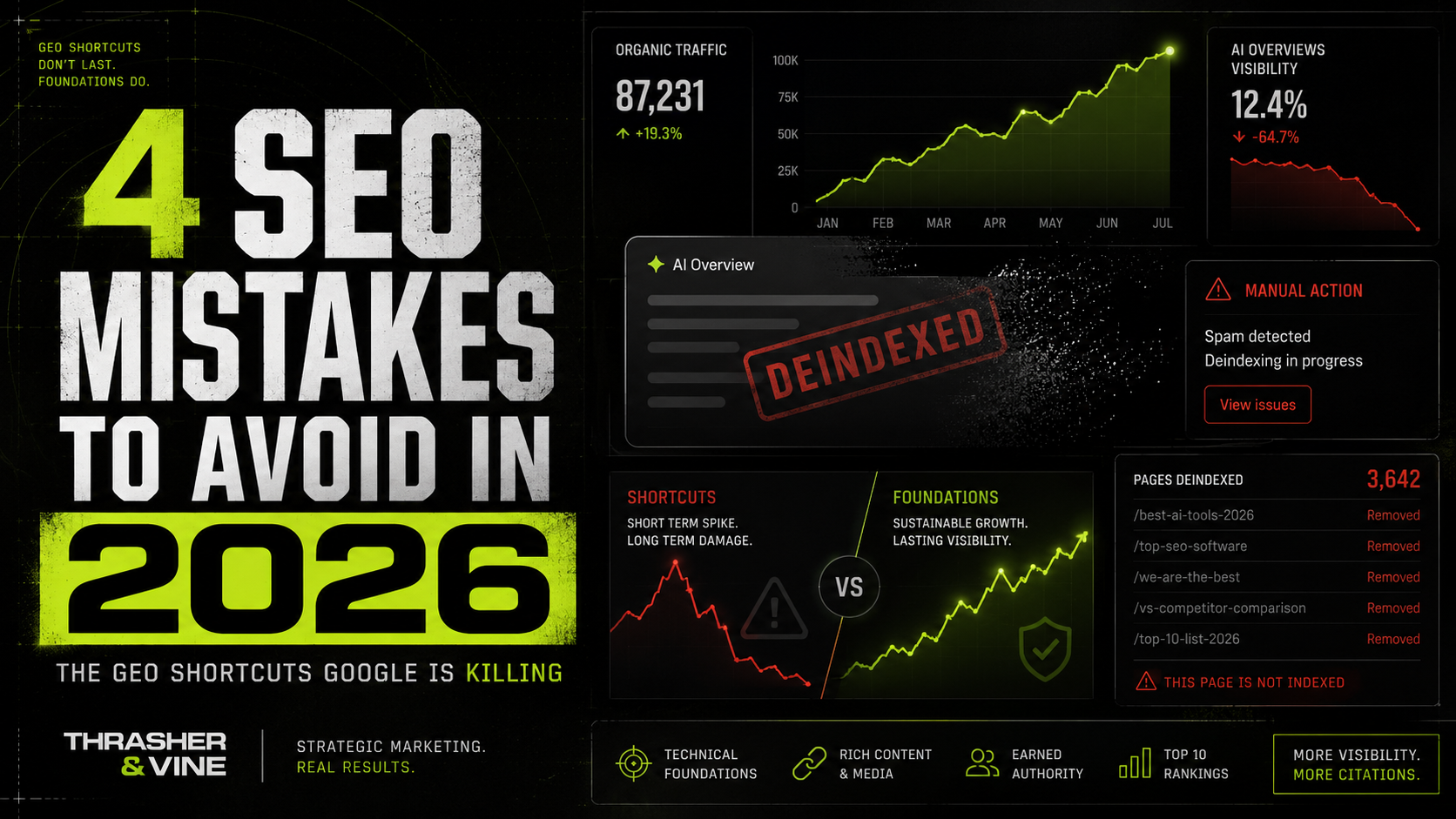


4 SEO Mistakes to Avoid in 2026
These are the top four mistakes I'm seeing SEOs continue to make with their SEO strategy in 2026 and how to avoid them
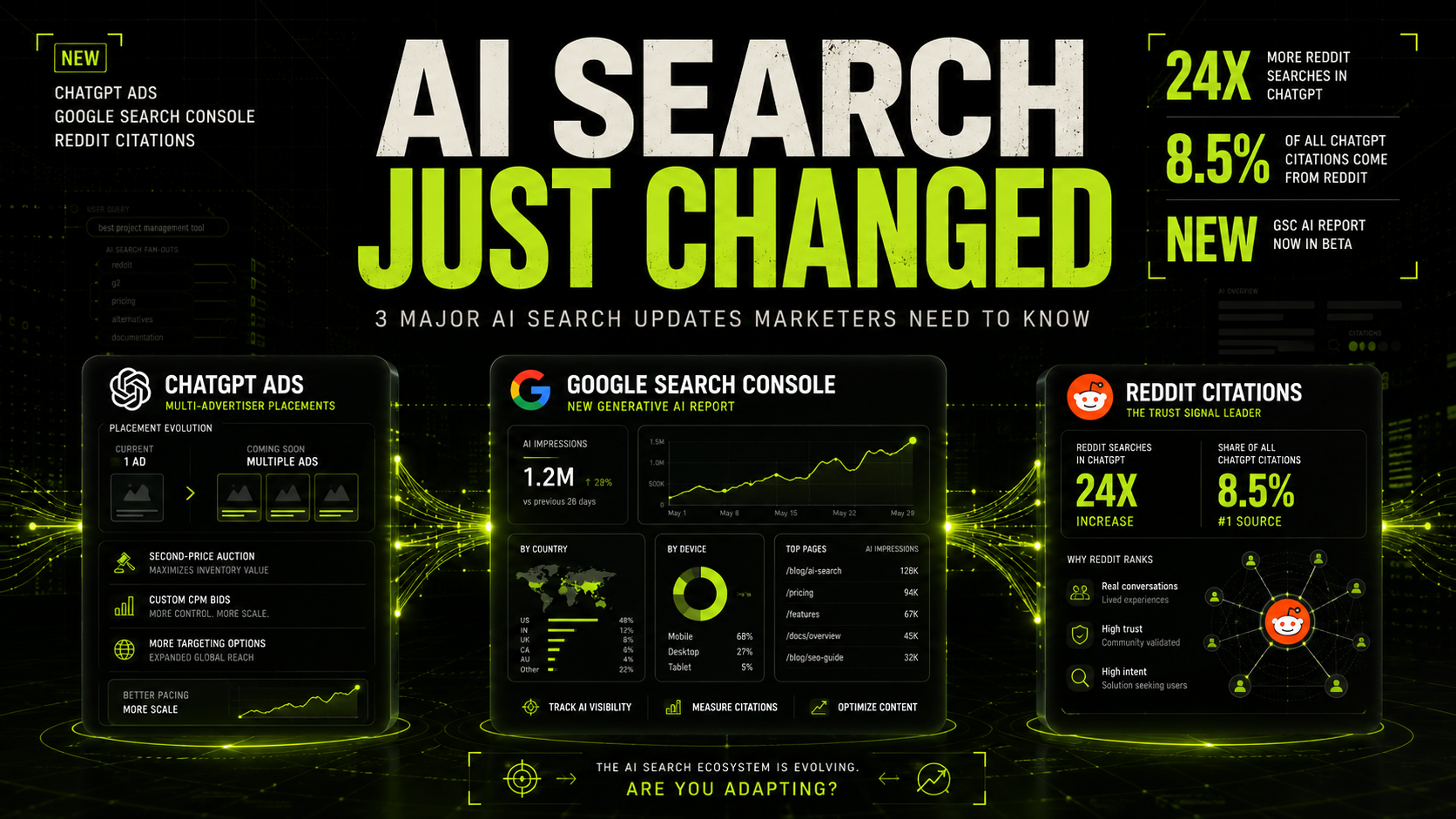
ChatGPT Ads, Google Search Console, and Reddit Citations: 3 Major AI Search Updates
A lot has shifted in the last few days across ChatGPT Ads, Google Search Console, and Reddit citation patterns inside AI Overviews. I want to walk through each one and break down what these changes actually mean for you.
How Thrasher & Vine Builds Predictable Marketing Pipeline for B2B SaaS Sales-Led Growth Teams
B2B SaaS companies from seed to Series A come to us with the same problem: they cannot build channels that drive consistent pipeline, or even reliable marketing qualified leads. We have a hunch about why.

Growth Marketing for Highly Technical Enterprise B2B Audiences: A Complete Guide
Growth marketing for highly technical enterprise B2B audiences requires a lot of up-front strategy. Unlike B2B SaaS companies with sales-led or product-led growth strategies, highly technical enterprise audiences have a different mechanism for growth.
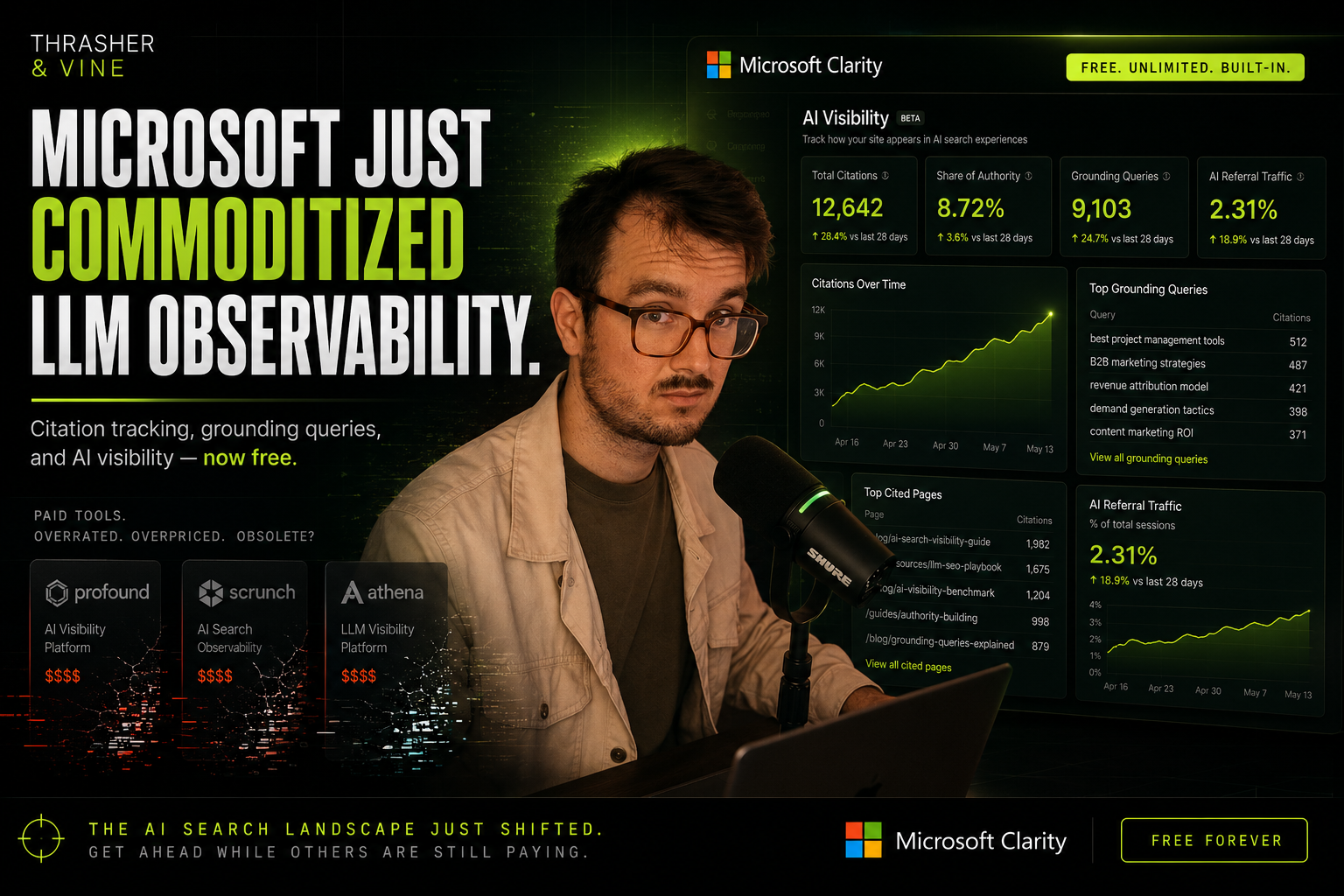
Microsoft Clarity Just Quietly Killed a Bunch of LLM Observability Tools
Microsoft Clarity just shipped a feature that wipes out a big chunk of the LLM observability market overnight — and most marketers haven't even noticed yet.
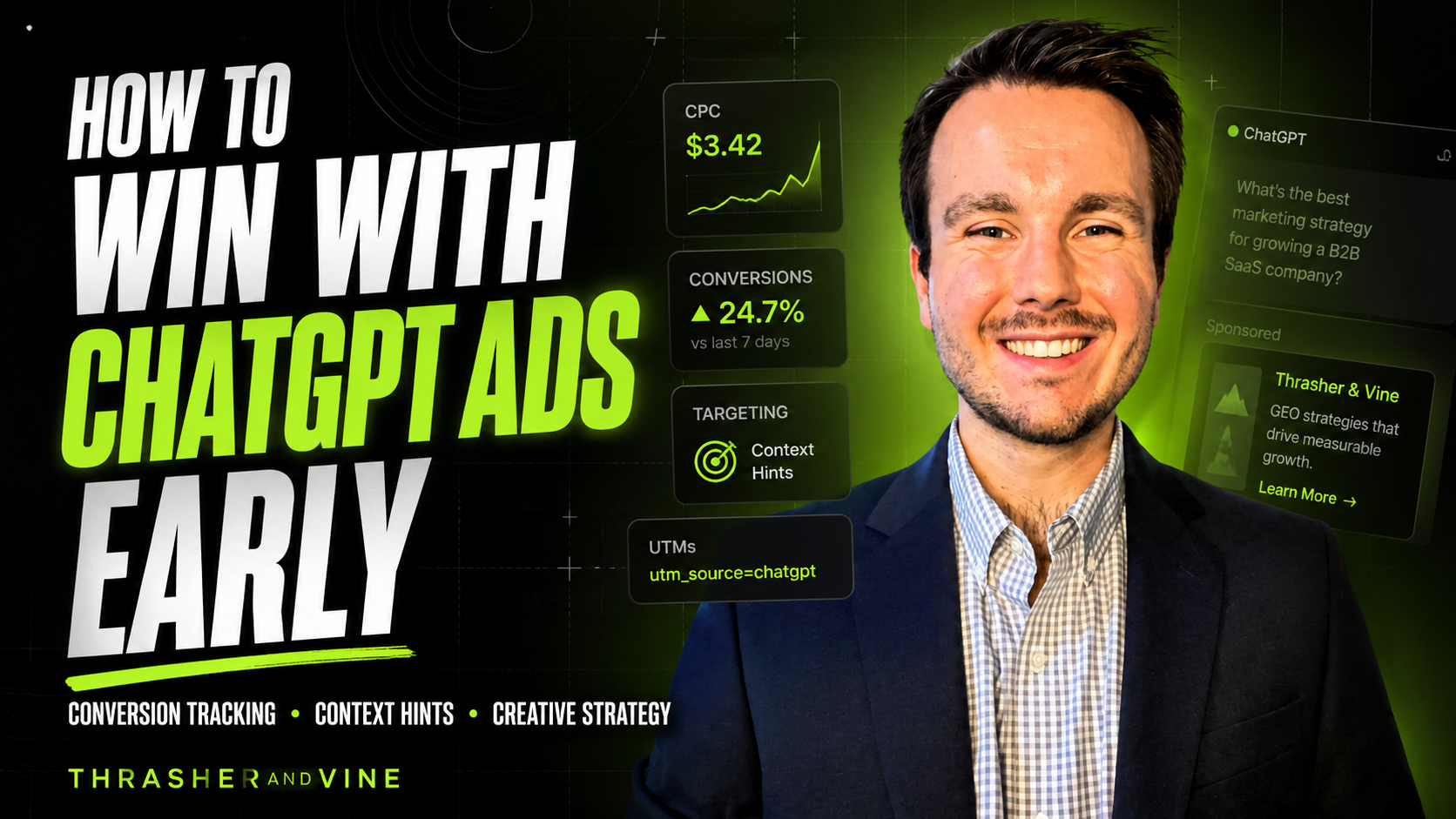
How to Set Up ChatGPT Ads the Right Way (Conversion Tracking, Targeting & Creative Tips)
ChatGPT Ads just opened up to the public as of mid-May 2026 and I've already been inside the platform testing it. In this post, I'm going to walk you through exactly how to set up your conversion tracking, how to think about targeting and bidding, and what your actual ads should look like. Let's get into it.


