


How We Use LLM Query Fanout to Supercharge Your SEO and AEO
SEO is still a huge growth channel for B2B tech companies — but how people search (and how Google delivers answers) is changing fast.
Between AI Overviews, AI Mode, featured snippets, “People also ask,” and answer-style results, the goal isn’t only ranking a page anymore. It’s also making sure your brand becomes part of the answers prospects are seeing while they research.
That’s why we’ve been leaning into something called LLM Query Fanout.
It’s not a buzzword. It’s a real mechanism that mirrors how modern search engines (and AI search experiences) expand questions behind the scenes.
SEO Is Changing (Even If Rankings Still Matter)
For years, SEO was pretty straightforward:
- Find keywords
- Create content
- Build authority
- Rank pages
- Earn clicks
That still matters — but the layout and behavior of search results now changes the game.
What’s different in 2026 SEO?
Here’s what most marketing leaders are noticing:
- More searches end without a click
- Users get answers directly in the SERP
- AI summaries pull information from multiple sources
- Buying decisions happen before the “demo request” search ever occurs
So the real question becomes:
How do you make sure your brand is one of the sources that AI systems trust and mention?
That’s where AEO enters the conversation.
SEO vs AEO: What’s the Real Difference?
Let’s keep this simple.
Traditional SEO
Traditional SEO is about:
- ranking pages in the top results
- earning clicks from Google
- driving traffic to your site
Answer Engine Optimization (AEO)
AEO is about:
- getting your content pulled into the answer itself
- helping Google/AI confidently summarize your POV
- showing up in AI Overviews / AI Mode / snippets / summaries
So in practice…
SEO = ranking
AEO = being used as the answer
(And yes — most good modern SEO is starting to overlap with AEO.)
What Is LLM Query Fanout (In Plain English)?
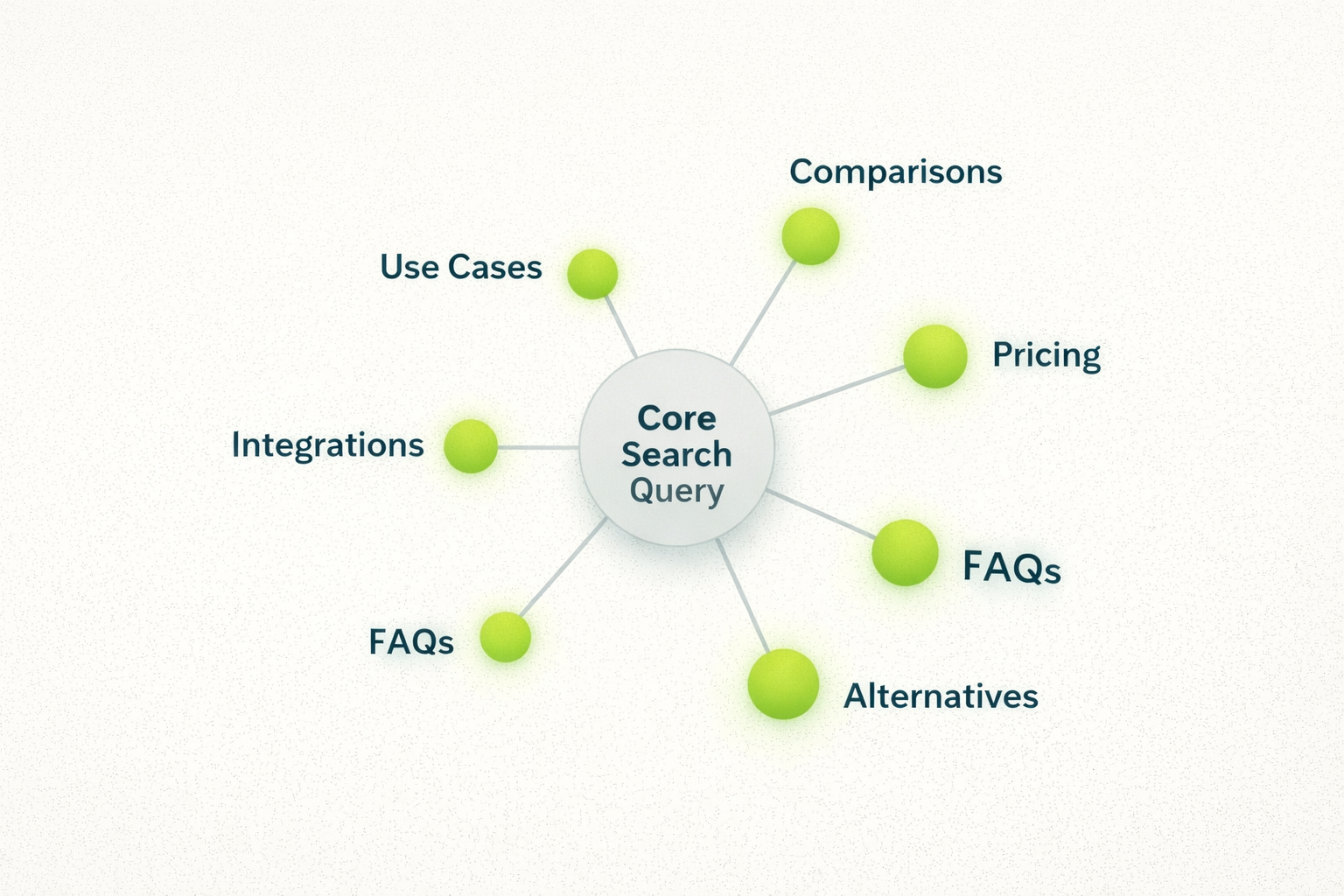
LLM Query Fanout is when one broad question gets expanded into many smaller related questions, so the system can return a more complete, confident answer.
Instead of treating search like one query → one result, it becomes:
one query → many supporting queries → combined answer
Google has confirmed this is part of how AI search works.
Google’s own words on Query Fanout
Here’s a quote worth including because it’s coming directly from Google Search leadership:
“AI Mode isn't just giving you information—it's bringing a whole new level of intelligence to search. What makes this possible is something we call our query fan-out technique."
— Elizabeth Reid, Google’s Head of Search
This matters because it validates the shift: search engines aren’t only matching keywords — they’re expanding intent.
How LLM Query Fanout Works (Step-by-Step)
Here’s what’s happening behind the scenes, simplified:
1) Someone searches a broad question
Example:
- “Best payroll software for startups”
2) The system expands it into sub-questions (fanout)
It may generate related searches like:
- “Best payroll software for 10–50 employees”
- “Payroll software that integrates with QuickBooks”
- “Payroll software pricing comparison”
- “Best payroll software for remote teams”
- “Payroll tools that support multi-state tax compliance”
3) It gathers evidence across multiple sources
Instead of pulling one result, it synthesizes from:
- vendor pages
- review sites
- comparison posts
- Reddit/community sources
- authoritative blogs
- YouTube
- documentation
4) It generates the answer
This becomes:
- AI Overview
- AI Mode answer
- featured snippet response
- comparison-style SERP modules
Why This Changes Content Strategy for B2B Tech SEO
Here’s the part marketing leaders need to understand:
Your audience isn’t only searching one keyword.
They’re searching a network of questions leading to a decision.
And AI-driven search is now building those networks automatically.
That means your content needs “coverage,” not just keywords
If you only publish:
- 1 blog targeting a broad term
…you’re often missing the dozens of supporting questions the AI system is using to form the final recommendation.
Fanout makes this gap obvious.
Practical SEO Examples of Using LLM Query Fanout
This is where it becomes real (and where it becomes a differentiator for an agency).
Example 1: Keyword research that goes deeper than “volume”
Instead of stopping at:
- “SOC 2 compliance checklist”
Fanout helps expand into:
- “SOC 2 checklist for early-stage SaaS”
- “How long SOC 2 takes”
- “SOC 2 vs ISO 27001”
- “SOC 2 requirements for startups”
- “SOC 2 automation tools”
Result: you publish content that covers the buying journey, not just the keyword.
Example 2: Building industry pages that actually rank and convert
You mentioned this earlier — and yes, you’re right.
Industry + use-case pages are becoming way more important, especially for:
- Seed / Series A startups
- niche categories (cybersecurity, fintech, dev tools, AI infra)
Why?
Because they align with intent.
Instead of a generic page like:
- “SEO Services”
You create:
- “SEO for Cybersecurity SaaS”
- “SEO for Fintech Startups”
- “SEO for DevOps Tools”
- “AEO for AI SaaS Companies”
Fanout helps you map:
- what each vertical cares about
- what objections exist
- which proof points matter
- which subtopics Google expects you to cover
Example 3: Making “AEO content” that AI can quote
AEO content works best when it’s easy for an AI system to extract:
- definitions
- comparisons
- step-by-step frameworks
- short clear answers
- structured FAQs
Fanout helps generate a “question set” for each page so you can include:
- FAQ sections
- schema markup targets
- mini-answer blocks
- clean H2/H3 formatting
This increases the chances your content becomes source material.
Why This Makes Our SEO Agency Approach Different
A lot of SEO agencies still operate with a 2018 playbook:
- pick keywords
- write blogs
- add internal links
- report rankings
That’s not enough anymore.
Our approach is built for modern search behavior
We’re using query fanout thinking to:
- structure content around intent clusters
- build page ecosystems (not one-off blogs)
- create content that ranks and gets referenced in AI answers
- align SEO efforts with AEO performance
In other words:
We’re not trying to “hack” AI search.
We’re aligning with the way it works.
Final Thoughts: If AI Search Expands Queries, Your Content Should Too
If Google is expanding one search into many sub-searches, the best SEO strategy is obvious:
Build content that covers the entire question map.
That’s what LLM Query Fanout helps us do — and that’s why we’re building SEO strategies that support both:
- traditional rankings
- AI answers / AEO visibility
If you want help building an SEO + AEO strategy using this approach, feel free to reach out.
FAQ Section
What is LLM Query Fanout?
LLM Query Fanout is the process of expanding one search query into multiple related sub-queries in order to generate a more complete and accurate answer.
Is Query Fanout used by Google?
Yes. Google’s Head of Search Elizabeth Reid has referenced query fan-out as part of what makes AI Mode possible.
How does Query Fanout help SEO?
It improves SEO by helping content teams map and create content around the broader set of questions users ask during research, which increases topical authority and ranking potential.
How does Query Fanout help AEO?
It helps AEO by producing content that directly answers the expanded sub-questions AI search systems rely on to create summaries and recommendations.
Written By:
.avif)
If you're looking for B2B SEO or Paid Media expertise, then you've come to the right place.
I am a freelance consultant that works with B2B companies to install systems & cutting edge tactics to improve performance and win more pipeline for your team.
%20(1).png)
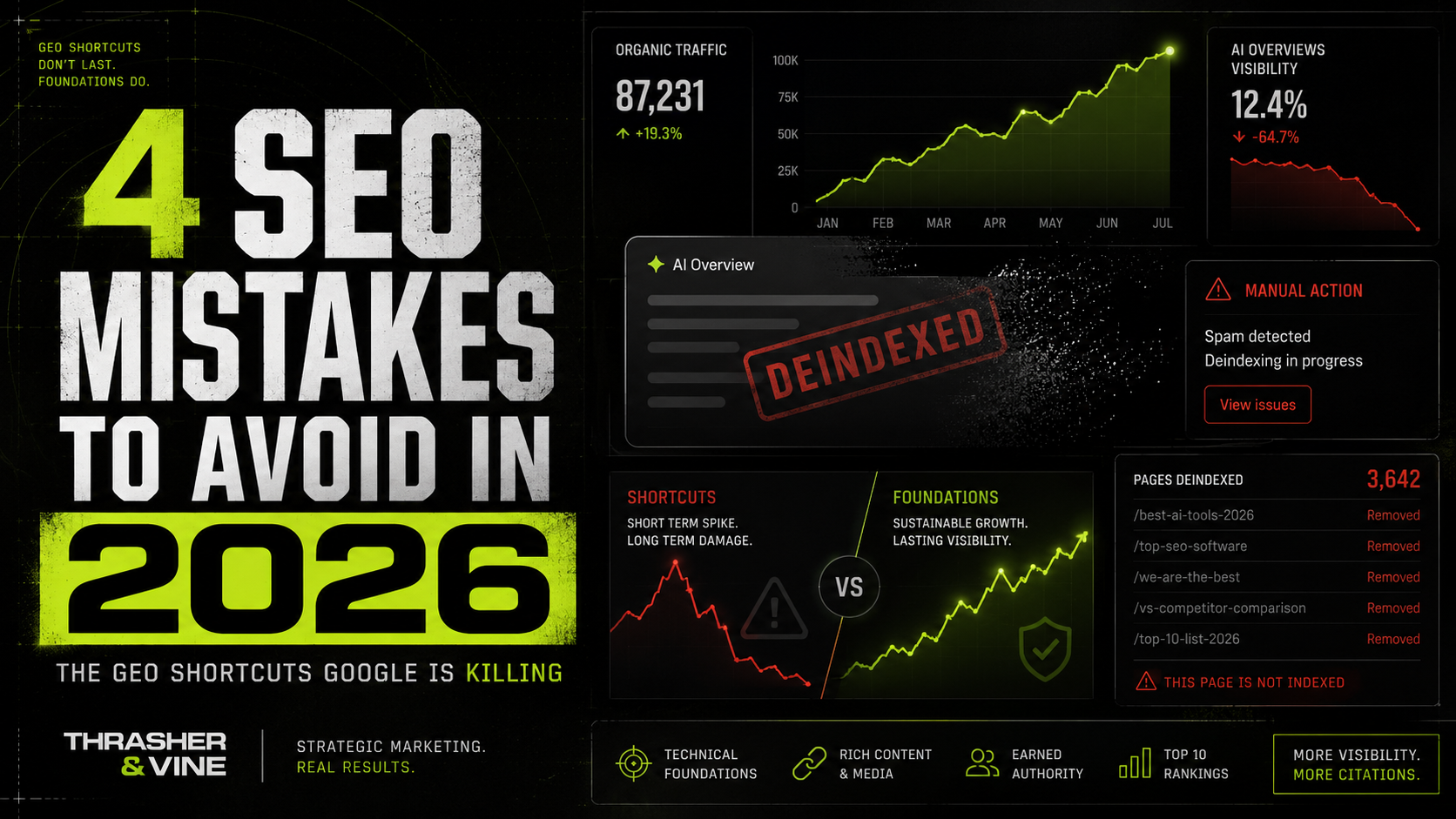


4 SEO Mistakes to Avoid in 2026
These are the top four mistakes I'm seeing SEOs continue to make with their SEO strategy in 2026 and how to avoid them
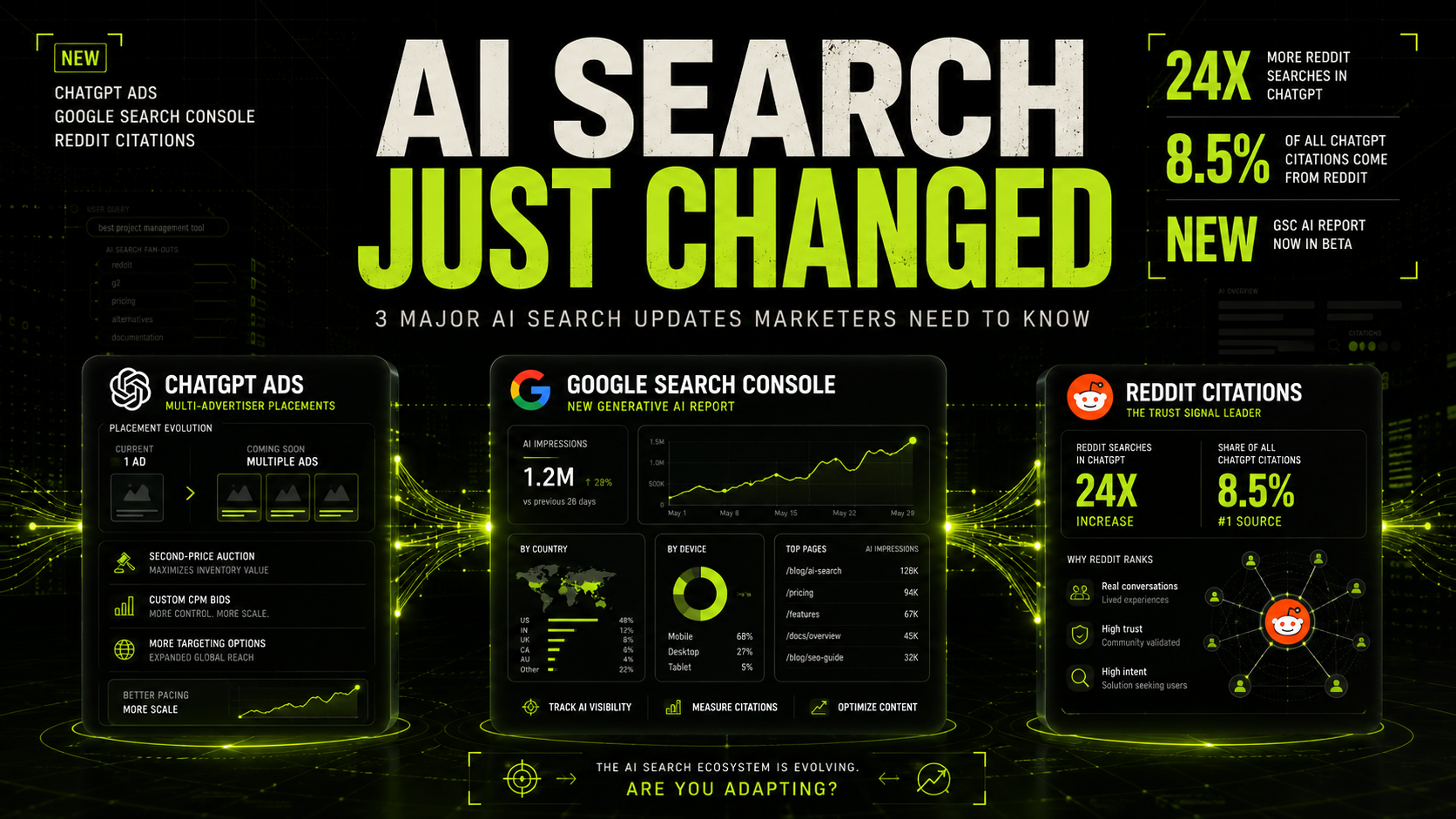
ChatGPT Ads, Google Search Console, and Reddit Citations: 3 Major AI Search Updates
A lot has shifted in the last few days across ChatGPT Ads, Google Search Console, and Reddit citation patterns inside AI Overviews. I want to walk through each one and break down what these changes actually mean for you.

How Thrasher & Vine Builds Predictable Marketing Pipeline for B2B SaaS Sales-Led Growth Teams
B2B SaaS companies from seed to Series A come to us with the same problem: they cannot build channels that drive consistent pipeline, or even reliable marketing qualified leads. We have a hunch about why.

Growth Marketing for Highly Technical Enterprise B2B Audiences: A Complete Guide
Growth marketing for highly technical enterprise B2B audiences requires a lot of up-front strategy. Unlike B2B SaaS companies with sales-led or product-led growth strategies, highly technical enterprise audiences have a different mechanism for growth.

Microsoft Clarity Just Quietly Killed a Bunch of LLM Observability Tools
Microsoft Clarity just shipped a feature that wipes out a big chunk of the LLM observability market overnight — and most marketers haven't even noticed yet.
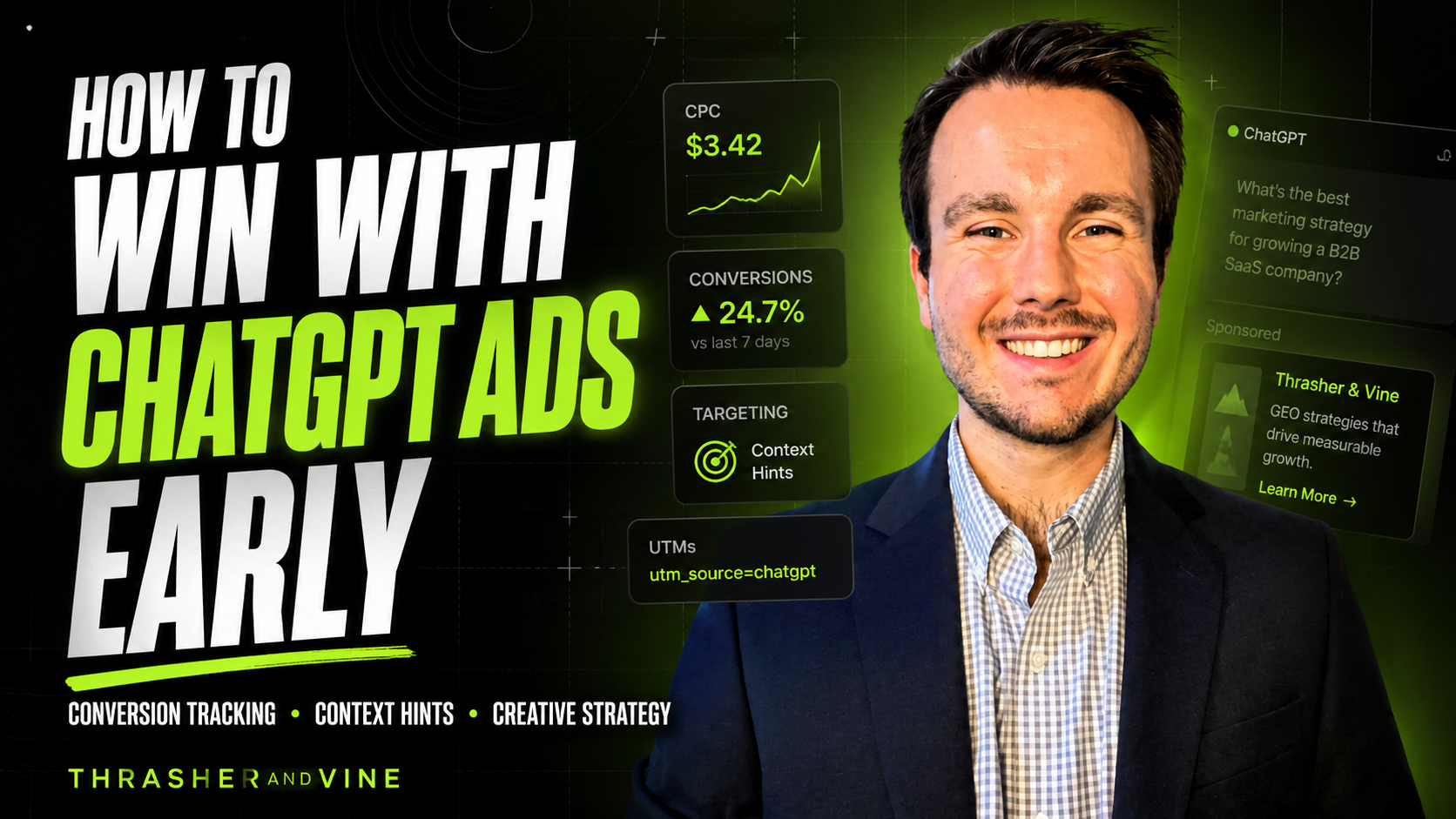
How to Set Up ChatGPT Ads the Right Way (Conversion Tracking, Targeting & Creative Tips)
ChatGPT Ads just opened up to the public as of mid-May 2026 and I've already been inside the platform testing it. In this post, I'm going to walk you through exactly how to set up your conversion tracking, how to think about targeting and bidding, and what your actual ads should look like. Let's get into it.


